Ensuring a clean and sanitary process environment is paramount for any processing facility. Whether you’re brewing beer or managing other food and beverage production lines, cleanliness directly impacts product quality, purity, and safety. At Glacier Tanks, we understand the importance of efficient, thorough cleaning, which is why we emphasize using a robust Clean-in-Place (CIP) system.
CIP allows you to clean process lines, vessels, and other equipment without having to disassemble piping or machinery. It enables you to maintain sanitary conditions, streamline cleaning processes, and reduce downtime, ensuring that your operations remain efficient and compliant with strict food safety standards. Here, we’ll explore best practices for CIP, discuss how to select the right equipment, and share expert advice for maximizing your CIP system’s performance.
What is CIP and Why is it Important?
CIP is a method designed to clean interior surfaces of pipes, vessels, equipment, and associated fittings without the need for disassembly. The system pumps cleaning solutions—including detergents, rinsing agents, and sanitizers—through the same route that your product travels during production. This ensures that all product residue, soils, and contaminants are removed from every internal surface, safeguarding your final product’s integrity.
CIP plays a critical role in production environments that process consumable goods, particularly in the brewing, dairy, and food processing industries. Proper CIP system implementation helps prevent contamination, reduce the risk of bacterial growth, minimize product liability claims, and ultimately extends the life of your equipment by reducing wear from disassembly and reassembly.
Key Considerations for an Efficient CIP System
Implementing an effective CIP system requires thoughtful planning and a clear understanding of the products you process, the equipment you use, and the frequency at which cleaning cycles should be run. Three main questions must be addressed to optimize your system:
- What Product Am I Cleaning? Each type of product leaves behind different residues, ranging from light soils to dense, challenging build-ups. Understanding what type of residue or “soil” you’re cleaning will dictate the CIP solutions, temperature settings, and the mechanical force (flow velocity) needed.
- Light Soils: Products like soft drinks, juices, and wet vegetable materials typically leave behind easily removable residues. These soils are water-soluble and do not require aggressive cleaning agents. In most cases, a pre-rinse followed by a caustic wash cycle is enough to dislodge and dissolve the remaining material. A two-tank system (one for the wash, one for the rinse) is often sufficient for these products.
- Moderate to Heavy Soils: Residues from more complex products, like dairy proteins, fats, oils, or meat slurries, require more robust cleaning procedures. High-temperature washes with strong detergents, and in some cases acid washes, are necessary to break down persistent organic matter. The high protein content in dairy products, for example, can lead to stubborn protein scales, which need acidic washes to dissolve. Additionally, using a pre-cleaning technique such as a projectile recovery system can significantly reduce water, chemical, and energy usage.
For heavily soiled lines, a pre-rinse might not be enough, and multiple wash cycles using both caustic and acidic cleaning agents could be required. Understanding the type of product soil is essential for determining the right CIP strategy.
- What Equipment Am I Cleaning? Your CIP system must be tailored to the specific equipment and components in your processing system. Not all equipment is designed for CIP, so selecting and maintaining CIP-compatible equipment is vital to ensuring effective cleaning.
- Pump & Piping: Ensuring proper cleaning of your pipes and in-line fittings requires achieving turbulent flow. The higher the flow velocity, the better the cleaning results, as the mechanical action of the flow will dislodge soil from the pipe walls. When designing a CIP system for piping, factors such as pipe size, internal surface finish, and proper drainage slope must be considered. For example, a piping slope of ¼ inch per foot is ideal for drainage to prevent residue build-up and bacterial growth. Proper operating pressure of the CIP needs to be monitored. Operating at too high or too low of a pressure can negatively affect the spray performance of the spray balls.
- Valves: Like pipes, valves must be designed with CIP in mind. Valves need to allow cleaning agents to reach all internal surfaces that come into contact with the product. Non-CIP-compatible valves should be replaced with CIP-friendly options or manually cleaned if necessary. Valves should also be cycled during the cleaning process to expose every surface to the cleaning solution.
- Tanks: Tanks present unique challenges due to their size and complexity. Choosing the correct spray devices is crucial. Properly positioned spray balls or nozzles ensure that all areas inside the tank are cleaned, including difficult-to-reach corners and recesses. If not positioned or sized correctly, spray devices can leave areas of the tank under-cleaned, which can lead to contamination. Ensure your pump system provides sufficient volume and pressure for the spray device to work effectively, cleaning the entire interior surface.
3. How Often Should You Run CIP Cycles?
Cleaning frequency is another critical factor in maintaining a hygienic process environment. While under-cleaning can lead to contamination risks, over-cleaning can waste resources and time.
- Low-Risk Products: Some products, such as carbonated beverages or vinegar, which are acidic by nature, may not require frequent cleaning cycles due to their resistance to bacterial growth. CIP cycles can be run less frequently in these instances, saving on cleaning time and costs.
- High-Risk Products: Dairy products, soups, and similar goods that are prone to bacterial growth or high-heat processing require regular, thorough cleaning to prevent bacterial contamination. For products that are heated during processing, residue can harden, becoming more difficult to remove. It’s crucial to schedule CIP cycles frequently enough to avoid the build-up of dried or burnt soils, which are harder to clean.
For both product safety and efficiency, it’s important to calibrate the frequency of your CIP cycles to the specific needs of your processing environment.
Glacier Tanks’ CIP Equipment Recommendations
At Glacier Tanks, we offer a full range of equipment to help ensure your CIP system performs at its best. From sanitary fittings to automated valves and tank spray devices, our high-quality products are designed to meet the unique demands of your operation. Here’s what we recommend for your CIP needs:
- Sanitary Piping & Fittings: We supply smooth, polished tubing and fittings that minimize the chance of soil adhesion, making them easier to clean and more hygienic.
- CIP-Optimized Valves: Our range of CIP-friendly valves, including those with automation features, ensures complete cleaning while minimizing manual labor.
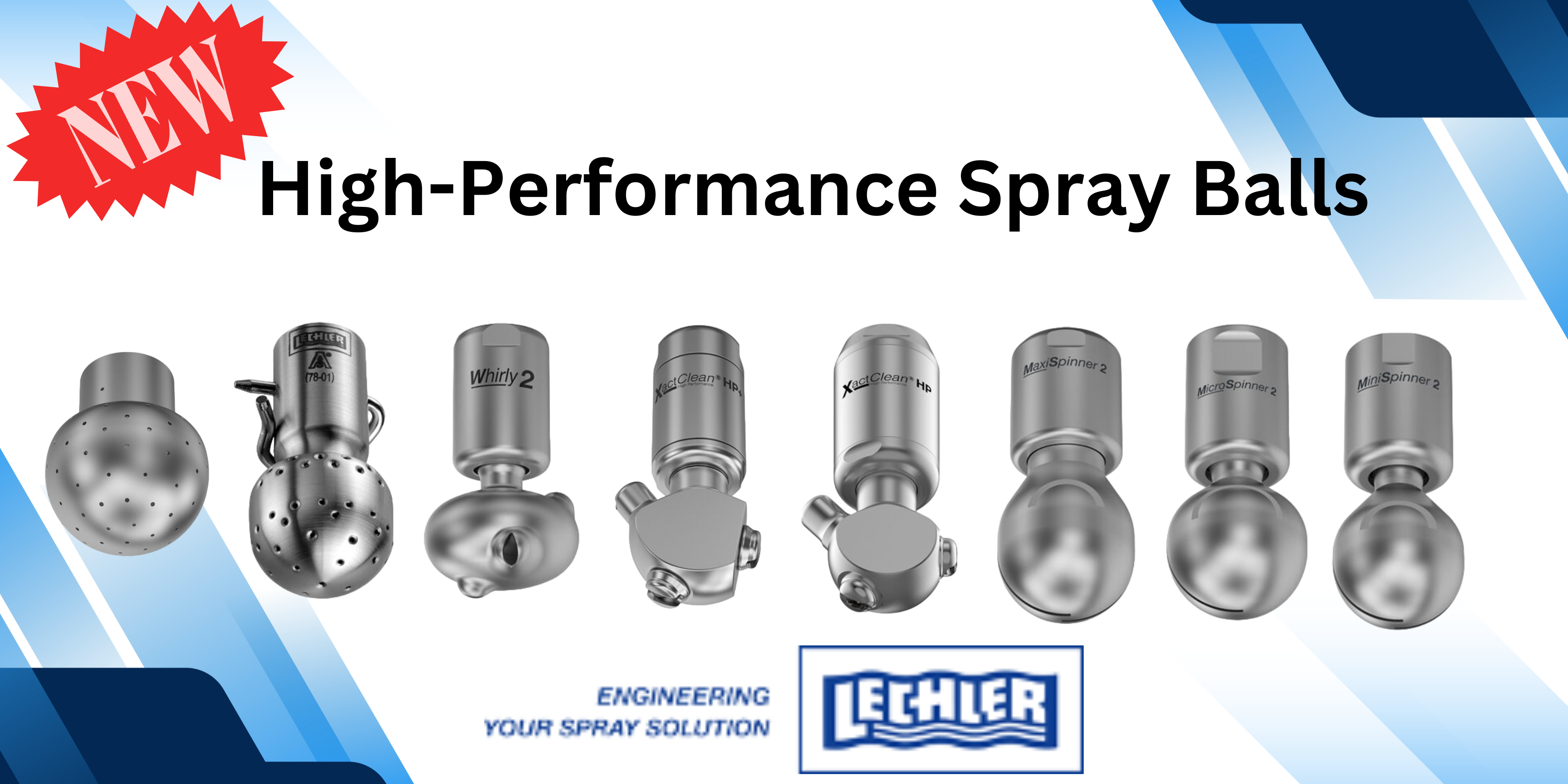
- Tank Cleaning Solutions: We offer an array of spray balls and nozzles designed to provide full coverage for tanks and vessels, ensuring that even the most challenging areas are cleaned effectively. Our expert team can help you customize tank cleaning solutions based on your facility’s needs.
Q&A with CIP Design Expert Robert Van Durme, P.E., M.B.A. from Lechler Engineered Spray Solutions
Q: What are the biggest challenges you see in improving & optimizing CIP systems in modern facilities?
A:We see the spray ball technology & placement supplied in the original equipment not well matched to the process. This results in shadows of surfaces not being cleaned, costly manual cleaning increasing the risk of safety accidents, very long CIP cycles costing operators in lost production time, high water consumption, & wastewater expenses. In most cases, these costs far outweigh what a better performing CIP system would entail.
Q: How does Lechler’s spray technology help overcome common cleaning issues in tanks?
A:We are process focused and work with the operators to learn & understand their needs. We separate the CIP requirement into 5 different cleaning efficiency classes based upon soil type and select the best design. Having a well designed spray pattern is critical to providing maximum impact on interior surfaces. In addition, modeling the interior of the tank to determine the best quantity, placement, & operating height of the spray devices all contribute to optimizing your CIP performance.
Q: Can you share an example where a customer improved their CIP system with Lechler technology?
A: A pharmaceutical company had been using a static spray ball and continually failed their swab test. This required manual cleaning and additional swab tests costing the company lost production time & confidence in their finished product. They replaced their current design with our XactClean® controlled rotation technology.
This resulted much improved cleaning requiring a fraction of the time they were spending and the tank has continually passed their QA inspections thereby eliminating manual cleaning & additional testing.
Q: What trends are you seeing in the future of CIP technology?
A: Many companies have sustainability programs requiring them to investigate & find places where improvements can be made in reducing energy consumption, water/cleaning agent usage, & wastewater generation. Many CIP system operators are just beginning to learn about the potential savings that can be made in optimizing their spray ball performance & selection.
At Glacier Tanks, we partner with leading industry experts like Lechler to bring you cutting-edge CIP solutions tailored to your specific needs. Contact us today to learn more about how we can help optimize your cleaning processes!

 Nathan Rice
 A reviewer